 Thirty Second Sunday in the Ordinary Time
6th November 2016
2 Maccabees 7:1-2, 9-14; 2 Thessalonians 2:16-3:5; Luke 20:27-38.
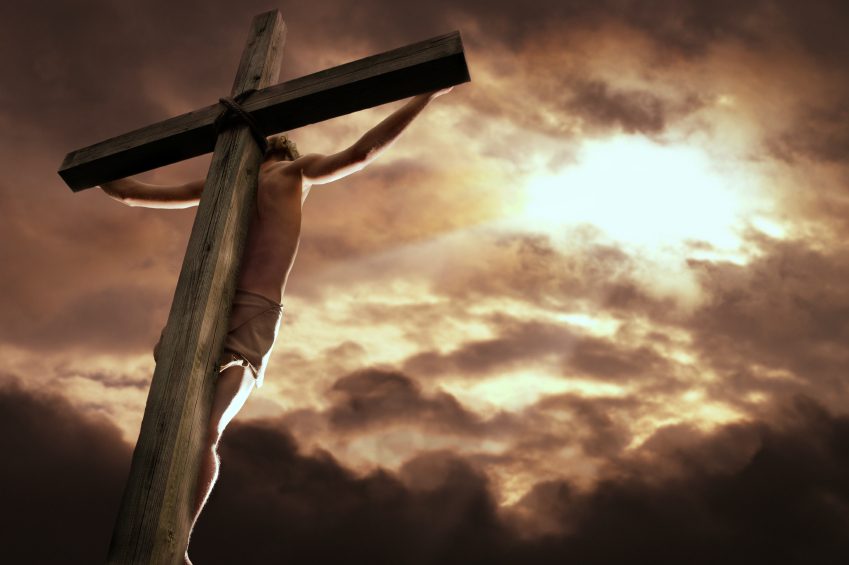
‘…he is God, not of the dead, but of the living; for to him all men are in fact alive.’ This concluding sentence of today’s gospel is the starting point of this homily. The resurrection of Jesus Christ is the event that confirmed the ethics of the cross, i.e. self-sacrifice of Jesus Christ. The scapegoat mechanism that characterized human society prior to Jesus Christ, is a stumbling block towards understanding the resurrection. The death or expulsion of the innocent in moments of crisis, unites the people and restores peace. Thus for man, death is synonymous with peace. Oftentimes, this mechanism is carried out in the name of the sacred, as we see in the execution of the seven brothers in the first reading. Those responsible for death of the innocent Jesus Christ on the cross believed they were carrying out a holy duty of restoring peace by eliminating the one thought to be responsible for the crisis. The resurrection proved His innocence and the message of forgiveness heralded by His dying on the cross. His crucifixion proved that love and not death brings peace. His death was a free self-giving, a sacrifice to expose and to prove the scapegoat mechanism wrong. God is of the living and not of the dead. Forgiveness brings true and lasting peace. He forgave his conspirators because they acted in ignorance, thus making all people innocent. Scapegoating brings relative peace, breeding fear and suspicion. It is a matter of time before the next victim to be expelled emerges.
The blindness of the Sadducees is based on their vision of the resurrection from the point of view of death. Death is the result of scapegoating of the innocent. The question of whose wife is the widow, depicts in clear terms the mechanism at work. Scapegoating is all about apportioning blames instead of looking at the bigger picture of love. Scapegoating is about avoiding the truth of the matter by pointing accusing finger on the innocent who has little or nothing to do with the crisis. Scapegoating is violent attack at the truth. In fact, they were trying to know who is responsible for the childlessness and who in the long run will inherit the liability (the widow). In the case of Jesus Christ, we notice the conspiracy that led to his crucifixion. Instead of addressing the temple corruption, the Sanhedrin accused him of blasphemy and sedition, setting him against the devout Jews and the Roman government respectively. But the cross revealed the truth, the innocence of Jesus Christ and all the innocent victims who died before and after him.
The seven brothers arrested with their mother in the first reading further depicts the innocence of the victims of scapegoating. From their testimonies, we picture the love motivating them to die for a just course. They looked unto the resurrection not from their death, but the motivation of love to die for what they hold scared. The justification that they will rise again is the guiding principle of love behind their action. When Jesus Christ rose from death, he rose as forgiveness i.e. love. He forgave those who conspired against him because they did not know what they were doing at the time. His death, unlike the scapegoat mechanism, did not apportion blame on anyone, rather he forgave in order to restore lasting peace. He teaches us to look towards his resurrection as a sign of lasting peace by forgiving each other. Forgiveness is a self-sacrifice of love in order to restore peace. Thus the resurrection is the assurance of God’s love in forgiveness.
As the children of the resurrection, we ought to always look at the resurrection as the guiding principle of the Christian life. The guiding principle of the resurrection, the ethics of the cross, is the self-sacrifice of Jesus Christ on the cross in order to expose the wickedness of scapegoat mechanism that leads to death. He destroyed death through forgiveness. We no longer die because we are termed guilty by the world, but we die in love through forgiveness, in order to rise with Christ in the heavenly banquet where there is no marriage i.e. the apportioning of blames. True Christian community is the place where innocence is celebrated through forgiveness. Like St. Paul prayed for the Thessalonians in the second reading, ‘May the Lord turn your hearts towards the love of God and the fortitude of Christ’.
Anthony Ekpunobi, C.M.