SECOND SUNDAY OF LENT, YEAR A
12th March 2017
Genesis 12:1-4; 2 Timothy 1:8-10; Matthew 17:1-9.
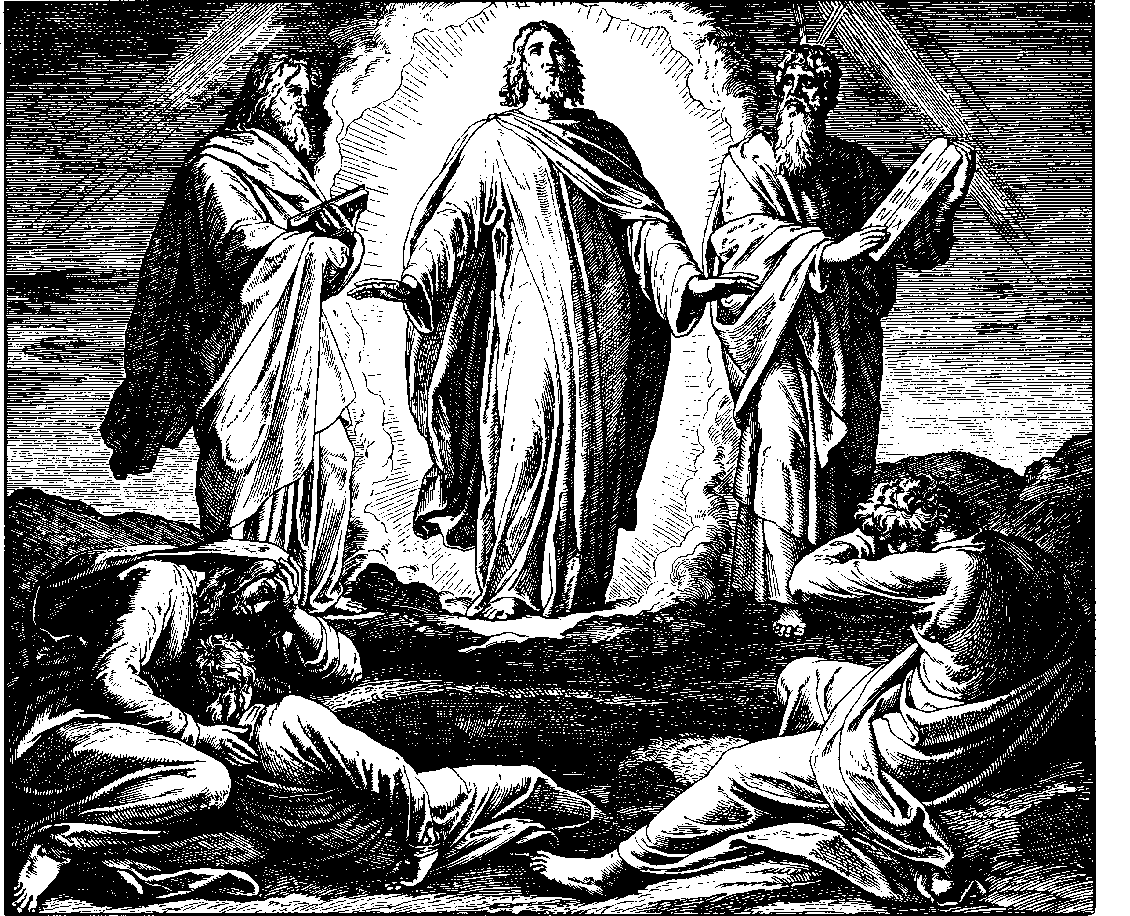
The story of the transfiguration that took place on mount Horeb is part of the plan of a loving God to keep his beloved children far from the reach of the evil mechanism that operates in the world. The saving love comes to us in the form of prohibitions and predictions. The figures of Moses and the Prophet Elijah, represent the Law and the Prophets. Divine law is made to guide and save humanity from the clutches of evil. Unfortunately we possess a nature that is repulsive to divine prohibitions and predictions. With so many forces struggling to model our desires and the inherent lack of knowledge of paths we chose, divine prohibitions and predictions serve as available guide to the right choice of a model.
The Decalogue or the Ten Commandments was beautifully designed by God to save man from the evil that is associated with human desire. According to Rene Girard, the principal source of violence between human beings is mimetic (imitative) rivalry, the rivalry resulting from imitation of a model who becomes a rival or a rival who becomes a model.[i] The ninth commandment forbids us to desire that which belongs to the neighbor. This is because the neighbor, that person who is always there, is the model of our desire. Imitative desire is always a desire to be another.[ii] In the process of imitation, we have the tendency of shifting focus from the object to the very being of the model. Divine prohibitions serve to prevent the root cause of violence and evil by putting restrictions and allowing only acquisitions that are backed by law. The Decalogue is able to prohibit it to the extent that objects desired are legally possessed by of the rivals. It cannot discourage all the rivalries of desire.[iii] The voice of prediction i.e. prophecy in gentle persuasion, urge us to accept the divine law option, and at the same, warning us of the impending evils of its rejection.
In today’s gospel and in the first reading, Jesus Christ shows us that the first step is to leave our comfort zones. He took his disciples to the high mountain of Horeb. For Abraham, had to leave the familiar environment he has always known to a land that God himself will show him. The comfort zone is where the ‘neighbor’ is found. The neighbor is that person whose desires will lead to crisis. We have to live above this comfort zone in order to find salvation in the divine prohibitions and predictions. What Jesus Christ displayed on mount Horeb is the ‘spirit’ that directs him towards his goal. On the mountain, far from the ‘neighbor’ Jesus Christ was able to connect with his mission through the eyes of the divine prohibitions – Moses, and the predictions – Elijah.
Predictions are repulsive to us because of the uncontrollable mimetic desire that is always pushing us to the neighbor as the sole model of our desires. This tendency always lure us into jettisoning divine prohibitions to opt for self-destruction instead. Hence St. Paul encourages us in the second reading to bear the hardships for the sake of the Good News, relying on the power of God who has saved us and called us to be holy. The phantom pains of not being in the usual encounter with the neighbor should be seen as gain and not pain. Divine laws are made to save humanity from perishing. Thus transfiguration means a change towards holiness which implies a pathway guided by prohibitions and predictions that control human mimetic desires.
Anthony Ekpunobi, CM.
[i] Girard, R. I See Satan Fall Like Lightning. New York: Orbis Books, 2001. P. 11.
[ii] ———— Deceit, Desire And The Novel. Transl. Yvonne Freccero. Baltimore: John Hopkins University Press,
- P. 15.
[iii] ————- I See Satan Fall Like Lightning. P. 12.