 FOURTH SUNDAY OF ADVENT, YEAR A.
18th December 2016.
Isaiah 7:10-14; Romans 1:1-7; Matthew 1:18-24.
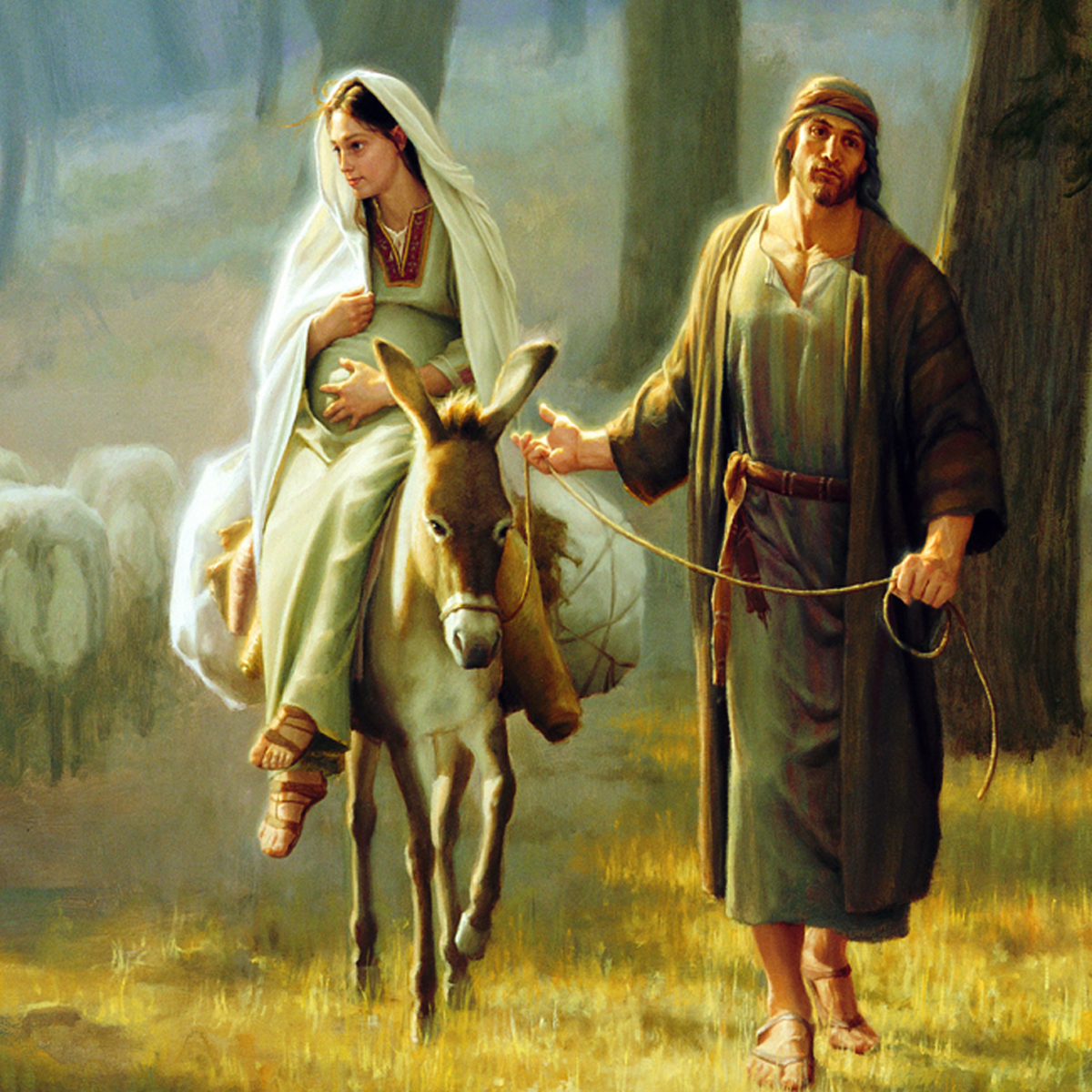
The Congregation for Divine Worship and the Discipline of the Sacraments issued a decree on May 1, 2013 (Prot. n. 215/11/L) which inserts the name of Saint Joseph into the texts of Eucharistic Prayers II, III, and IV of the Roman Missal. Today’s gospel presents in few sentences the great effort and role played by St. Joseph in the salvation history. To presume that St. Joseph gave up his ‘manhood’ (traditional qualities associated with men) in order to take Mary and her unborn child as his own, as the mark of an honorable man is out of place. It takes more than honor to carry out a task of such magnitude.
Prior to the annunciation by the angel Gabriel, Mary was already betrothed to St. Joseph. Beyond the agreement between the two families, there is love between Joseph and Mary. They love themselves. From the point of view of the love existing between them, we can understand the respect to divorce Mary informally i.e. secretly. Also the decision to accept Mary and her unborn child as his own, is both the inspiration of the Holy Spirit and the love existing between them. Through love Joseph is able to let go of the rumors surrounding the source of the unborn child to accept the woman of his heart. It is difficult to imagine the nature of Joseph’s love for Mary. What he denied himself is exactly what is humanly required to express love. Children are the expressions of love between a husband and wife. Accepting not to have his own child in order to take care of Mary and the unborn child provokes a question bothering on the nature of this love.
The unborn Mary’s child is enough reason supported by law to warrant an official divorce even to this day. No man is able to bear such disgrace and shame coming from a woman he has given his heart. Although the child in question is a son of God, the human nature is not lost in whole event. Also the mention of Joseph’s dream, does not also discard the human nature. There is more to this story than is presented. The theme of forgiveness at the heart of Jesus’ message find’s its origin here. Prior to the dream, Joseph forgave Mary the moment he decided to divorce her informally. Mary’s sin is perceived from the point of Jewish culture forbidden premarital pregnancy. The message of the dream strengthened the love of forgiveness enabling him to surmount the human cultural judgement of premarital pregnancy. St. Joseph’s love for the Blessed Virgin Mary is a foreshadowing of the message of Jesus Christ – forgiveness and love.
The love character of Joseph has a big lesson for us this Christmas. He has shown the greater good that comes from forgiveness. He was united with the woman of his love, when he decided to let go of the then unknown source of the pregnancy. His could perceive in his love the innocence of Mary. Forgiveness as Jesus Christ expressed on the cross, revealed the innocence of humanity at the face of evil. The cross revealed the innocent victim of collective victimization. The Jewish culture judged Mary to be guilty, but Joseph’s forgiving love proclaimed her innocence.
Forgiveness in the season of Christmas will bring joy to hearts of victims of injustice. It will also restore peace in our hearts. The birth of the messiah is to prove our innocence before the evil that accuses us before God. The messiah restores our innocence by his presence in human condition through the incarnation.
Anthony Ekpunobi, CM.