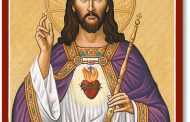
FIFTH SUNDAY OF EASTER, YEAR A.
10th May 2020
Acts 6:1-7; 1 Peter 2:4-9; John 14:1-12.
Jesus Christ is THE revelation of God. (John 14:9). Through the Ethics of the Cross, Jesus Christ revealed to us a God who is loving and close to His children. Thus no one can come to the Father except through Jesus Christ. (John 14:6). Jesus Christ is the gateway to God in whose heart there is abundant of spaces for everyone. (John 14:2). This loving father revealed by Jesus Christ is the true nature of God. The Old Testament understanding of God, although not in contrast, is remote and unapproachable. Thus, what Jesus Christ reveals about God is foremost, His own father, the loving Father. Jesus Christ invites us to share in the love of His father. He is the only one eligible to extend this invitation to humanity. He is the way, the truth and the life. We are bound to imitate Him in order to honor this invitation. The focus of the readings is to enable us to overcome the feeling of deprivation that comes with imitation.
The feeling of deprivation is at the root of pride and rivalry. We live through the imitation of each other. But we feel deprived each time experience demands the revelation of the model we imitate. God created us to imitate Him. The Garden of Eden is a model of the joy and blessedness of exclusive imitation. (Genesis 2:15). Although we cannot see God, but through imitation of a perfect model, we approach God. The perfect model of God is Jesus Christ. Thomas exhibited the true human nature of imitation when he asked; ‘Lord, we do not know where you are going, so how can we know the way?’(John 14:5). Someone must lead the way for others to follow. This natural human process. Pride is the failure to acknowledge this process.
Why would one frown at revealing Jesus Christ as the model of one’s desire? Why would Philip say to Jesus Christ, ‘Lord, let us see the Father and then we shall be satisfied?’ The tendency to feel deprived is ruling his actions. The very FATHER that is revealed by Jesus Christ alone, Philip wishes to approach without Jesus Christ the revealer. Eve felt this same way when she decided to eat the fruit of the tree in the middle of the garden. (Genesis 3:6). The reason for the feeling of deprivation is enshrined in our weak human nature. Eve felt cheated by God. Philip felt belittled to approach God through a channel. Are these feelings real? The reality of these feelings could make of mar us.
It was to destabilize the influence of this human tendency that the apostles decided to appoint deacons vested with the task of distributing food. According to Peter, ‘It would not be right for us to neglect the word of God so as to give out food; …we will …continue to devote ourselves to prayer and to the service of the word.’ (Acts 6:2-4). This is the challenge priests face at the distribution of charity to the poor. The priest is dragged between to control or to serve. The inspiration to serve the word of God comes through the Holy Spirit. The apostles fully acknowledging the source of their vocation, preferred to remain connected with the model of their vocation in order to serve the word of God. The feeling of deprivation could be seen as a weakness in order to open us to a perfect model or motivate us to affirm our independence in order to revolt.
The second reading from first letter of St. Peter makes Jesus Christ a necessary step towards salvation. Refusal to acknowledge Jesus Christ will always lead to revolt- sin. According to him, ‘That means that for you who are believers, it is precious; but for unbelievers, the stone rejected by the builders has proved to be the keystone, a stone to stumble over, a rock to bring men down. They stumble over it because they do not believe in the word; it was the fate in store for them’. (1Peter 2:7-8). There is no harm in imitating a model, this is human nature. We learn through the process of imitation. Thus is it through this beautiful nature of ours that God comes to us through Jesus Christ.
Anthony Ekpunobi, CM.